 By Layla Isla
Sydney office catering has moved well past the days of a boardroom table piled with plain sandwiches. A single menu for every employee is no longer the norm. Staff preferences are evolving, and so are the options available now that the workplace isn’t always a physical location. Corporate lunch trends, dietary inclusivity and hybrid workplace dining are all shaping how businesses feed their people, impress visiting clients, and will keep doing so into 2026. How a business handles “lunch with the team” or “lunch with the client” says a lot about how that business runs today. This guide looks at the current trends in Sydney office catering, the questions office managers should ask before hiring a caterer, and the effect food has on employee morale and productivity, an effect many office planners still underestimate.
Key Takeaways
- Office catering isn’t just about ordering lunch anymore; it’s part of the broader employee experience.
- Grazing boxes and mobile lunches suit flexible schedules, including hybrid workplaces.
- A single dietary side option is no longer enough. Inclusivity now needs to be built into the main menu.
- The NSW Food Regulation’s 2-hour/4-hour rule directly affects how and when office catering is timed and served.
- From a casual breakfast meeting to a formal client lunch, the catering on offer makes a statement about the business.
Why Office Catering Has Become a Bigger Priority
A lunch platter used to be treated as a nice-to-have. That’s no longer true. Food consistently ranks as a top factor when staff are asked about their experience at work, and businesses with a more holistic approach to employee experience tend to see stronger engagement around shared meals and workplace events.
The reason is straightforward. A well-planned lunch is one of the simplest ways to lift morale on an ordinary workday, and it matters just as much when clients are in the room. A tired, carb-heavy spread from a decade ago sends a very different message than a thoughtfully designed menu built around the people who’ll actually be eating it.
Top Office Catering Trends Shaping Sydney in 2026
1. The Shift to Grazing Boxes and Mobile Lunches
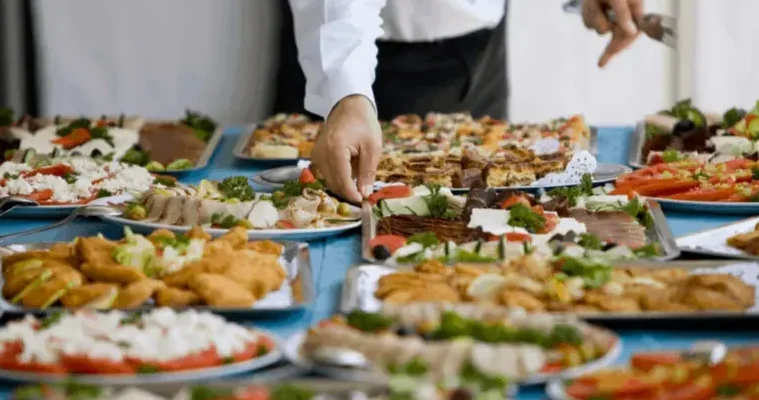
Hybrid working has reshaped how people eat at work. With fewer teams gathering daily for a formal, seated lunch, demand has grown for food that fits standing meetings and irregular schedules. Grazing boxes, individually wrapped lunches and easy-to-eat platters have become the standard for day-to-day office catering, while larger sit-down formats are now reserved for bigger events and client functions.
2. Dietary Inclusivity as a Default, Not an Afterthought
Managing dietary requirements has become one of the biggest practical challenges facing Sydney office managers. A single vegetarian item tacked onto the end of a menu isn’t enough. Vegan, gluten-free, dairy-free and nut-aware options need the same care and prominence as everything else on offer, especially in a city as culturally diverse as Sydney, where a single office floor might represent a dozen different cultures and dietary needs.
3. Seasonal NSW Produce and Local Sourcing
Sourcing has shifted from a nice touch to a genuine planning consideration. Menus built around seasonal NSW produce tend to taste better, cost less at volume, and give caterers more flexibility to vary the offering through the year rather than repeating the same rotation month after month.
4. Zero-Waste and Eco-Conscious Packaging
As with events more broadly, sustainability has become part of office catering. Sydney businesses, particularly in sectors like financial services and technology, where environmental accountability is built into business practice, are increasingly requesting compostable packaging, less single-use plastic, and smaller, less wasteful packaging overall.
5. Food Safety Compliance Is Getting More Attention
Caterers also have to plan around some practical constraints. Under the NSW Food Regulation’s “2-hour/4-hour rule,” food that isn’t kept at a safe temperature can only sit out for a set period before it must be refrigerated, served immediately, or discarded. This matters for office catering, where food often sits out longer than expected, left untouched, say, through the first part of a meeting. Getting delivery timing and holding areas right is important both for staff wellbeing and for the business booking the caterer. A clear process goes a long way toward reducing that risk.
Matching Catering Style to the Type of Office Event
Different occasions call for different catering styles. A quick reference makes planning easier:
| Occasion | Best Catering Style | Why It Works |
|---|---|---|
| Daily team lunch | Grazing boxes, individually packaged meals | Flexible, fits varied schedules |
| Boardroom client meeting | Sushi platters, finger sandwiches | No cutlery, no crumbs, keeps focus on discussion |
| Breakfast meeting | Simple pastry and fruit spreads | Quick to serve, easy to clear |
| Large staff celebration | Full buffet or canapé-style service | Scales well for bigger guest counts |
| Training day or offsite | Substantial shared platters | Keeps energy up through a longer session |
Regional Considerations Across Sydney
The type of office catering a business needs varies depending on where in Sydney it’s based. A CBD office building with limited loading docks and lift access presents very different logistics to a business park in Western Sydney with easy vehicle access. Planners in the Inner West, Eastern Suburbs and Northern Beaches tend to favour more polished, presentation-focused menus for client-facing events, while those in Western Sydney, the Sutherland Shire and the Hills District often lean toward more relaxed, easy-to-serve menus for events catering to their own teams. A catering company with genuine experience across these different parts of the city will usually flag logistics issues upfront, not on delivery day when the office manager is left to sort it out alone.
A Simple Example: Rethinking a Weekly Team Lunch
Picture a mid-sized Sydney company that had booked the same plain bread platter for its weekly team lunch for over a year. Staff feedback started to reflect a wider pattern: the food was repetitive, dietary needs were only partly met, and the 3pm energy slump had become something of an office joke.
The company switched to a rotating grazing box menu that built in vegan and gluten-free options, along with seasonal produce, without staff needing to make a special request. Within a couple of weeks, feedback had noticeably improved, and the office manager reported a sharp drop in last-minute asks to sort out a colleague’s dietary requirement. Those staff were now catered for by default. It’s a low-cost change, but it reflects a broader shift happening across Sydney: when catering is treated as a considered part of the workday rather than an afterthought, staff satisfaction improves.
Choosing a Catering Partner for Office Events
Before hiring an office caterer or booking a larger corporate event, it’s worth asking a few questions upfront:
- How is dietary information collected and reflected in the menu, rather than handled as a special request?
- How is food kept within safe temperature and time limits during longer meetings?
- Can the menu change with the seasons, or does it stay the same year-round?
- What are the building’s delivery logistics, loading docks, lift access and the like?
- What packaging is used, and are compostable or lower-waste options available?
For businesses across the CBD looking for a partner who understands these everyday realities, working with an experienced provider of Catering Sydney CBD offices regularly rely on can make ongoing logistics far simpler, from recurring weekly lunches to one-off client events.
Frequently Asked Questions
How often should a business review its office catering?
A check-in every few months is a reasonable rhythm, particularly after hiring new staff, moving offices, or noticing the same feedback come up repeatedly about the food on offer. Reviewing how dietary information is collected at the same time helps keep the menu accurate as the team grows or changes.
What’s the biggest mistake offices make with catering?
Overlooking dietary needs. When meat-free, gluten-free or dairy-free options are added as an afterthought, they usually taste noticeably different from the rest of the menu.
Does food safety really matter for office catering?
Yes. Under the NSW Food Regulation’s 2-hour/4-hour rule, food left at an unsafe temperature for too long must be refrigerated or discarded. This is especially relevant to office events, where food is often left out for extended periods during a meeting rather than served and eaten straight away.
Is grazing box catering suitable for larger events, or just daily lunches?
Grazing boxes work best for everyday lunches and smaller meetings. For a client function or end-of-year celebration with a larger guest count, a fuller meal service is usually the better fit.
How far in advance should office catering be booked?
For a regular weekly order, minimal lead time is needed once a menu rotation is in place. For a one-off event, particularly during the busy November and December catering season, booking several weeks ahead will help you avoid the rush of Sydney’s peak period.