 By Layla Isla
In the modern fitness landscape, physical conditioning is frequently categorized into narrow, isolated domains. Cardiovascular training focuses primarily on heart and lung capacity, weightlifting targets muscular hypertrophy and absolute strength, and traditional stretching isolation routines address localized flexibility. While these individual modalities offer distinct benefits, they often overlook the complex, integrated nature of everyday physical activity.
Real-world movement does not occur in a vacuum or along fixed mechanical tracks. Walking across an icy sidewalk, reaching for an object on a high shelf, or recovering from an unexpected trip requires a highly coordinated interaction between the musculoskeletal system and the central nervous system. This integrated capability is known as functional movement, and its foundational pillars are balance and stability.
Rather than training muscles in isolation, the ancient yet evolutionarily refined practice of yoga offers a comprehensive, evidence-based system for enhancing full-body coordination. By challenging the body across multiple planes of motion, demanding sustained isometric contractions, and sharpening neurological awareness, yoga functions as a profound biomechanical tool that transforms how the human body moves, reacts, and stabilizes itself.
The Biomechanics of Balance and Stability
To appreciate how yoga enhances physical performance, one must first deconstruct the underlying physiology of balance. Balance is not a static state but a dynamic, continuous process of making microscopic muscular adjustments to keep the body’s center of mass directly over its base of support. This complex feedback loop relies on the seamless integration of three primary sensory inputs:
-
The Visual System: The eyes map the surrounding environment, providing spatial reference points and tracking the body’s position relative to external objects.
-
The Vestibular System: Located within the inner ear, this specialized apparatus detects fluid shifts caused by head movements, sending rapid updates to the brain regarding linear acceleration, rotation, and gravitational orientation.
-
The Proprioceptive System: A dense network of microscopic mechanoreceptors, including muscle spindles and Golgi tendon organs, embedded within skeletal muscles, tendons, joints, and the soles of the feet. This system acts as the body’s internal global positioning system, instantly communicating the exact angle, tension, and location of every joint to the central nervous system without requiring visual confirmation.
Yoga explicitly targets and hyper-charges the proprioceptive system. When an individual steps onto a yoga mat and executes a challenging single-leg posture, the brain is forced to process a massive influx of proprioceptive data. The tiny muscles, ligaments, and tendons surrounding the foot, ankle, and knee joints must contract reflexively to counteract gravity and surface micro-shifts. Over time, this consistent neurological stress strengthens the neural pathways between the peripheral joints and the motor cortex, drastically reducing the time it takes for the nervous system to execute a stabilizing muscular correction.
Strengthening the Deep Stabilizer Network
Traditional strength training often prioritizes the large, superficial muscle groups, such as the quadriceps, gluteus maximus, and latissimus dorsi. While these prime movers are essential for generating explosive power and lifting heavy external loads, they are not designed to maintain fine-tuned joint stability over prolonged periods. True stability depends on the deep, intrinsic stabilizer network.
Yoga poses, or asanas, are uniquely structured to engage these hidden structural guardians through sustained isometric contractions. For instance, holding a balancing posture requires the deep stabilizer muscles of the hip, such as the gluteus medius, minimus, and tensor fasciae latae, to fire continuously to keep the pelvis level. If these stabilizer muscles are weak, the pelvis tilts laterally, causing the mechanical load to shift unevenly onto the lower back and knee joints, which directly compromises functional movement.
Furthermore, yoga places a heavy emphasis on core stabilization, but its definition of the core extends far beyond the visible rectus abdominis muscle. Yoga systematically activates the deep local stabilizing muscles of the spine and abdomen, specifically the transversus abdominis and the multifidus. The transversus abdominis acts as a natural weightlifting belt, wrapping horizontally around the midsection to compress the abdominal cavity and stabilize the lumbar spine. By building endurance within this deep muscular corset, yoga creates a rigid, supportive foundation that allows the limbs to move with greater efficiency, safety, and power during daily activities.
Restoring Functional Range of Motion and Fascial Elasticity
Muscular strength means very little if the surrounding joints are locked in a restricted, rigid state. Chronic sitting, repetitive movement patterns, and sedentary lifestyles cause the body’s connective tissues to shorten and stiffen over time. This restriction alters basic biomechanical levers, forcing the body to adopt compensatory movement patterns that ultimately lead to pain, joint degeneration, and balance impairments.
Yoga addresses this limitation by systematically stretching and mobilizing the entire body through a wide range of motion. Unlike sudden, aggressive ballistic stretching, yoga utilizes a combination of passive static stretching and active dynamic stretching. This approach respects the body’s natural defensive mechanisms, such as the stretch reflex, which automatically contracts a muscle if it is stretched too quickly or aggressively.
Crucially, yoga’s slow, sustained movements directly impact the fascial system. Fascia is the complex, continuous web of collagenous connective tissue that wraps around and binds every muscle fiber, blood vessel, and organ. When an individual remains sedentary or suffers from chronic stress, the layers of fascia lose their natural hydration and develop micro-adhesions, essentially gluing muscles together and restricting smooth sliding movement. The long, multi-directional holds in yoga apply mechanical shear stress to these fascial sheets, stimulating the production of hyaluronic acid and restoring tissue hydration. This structural lubrication frees the muscles to move independently, expanding the functional range of motion in the hips, shoulders, and spine.
Neurological Plasticity and the Breath Mechanics Link
The physical benefits of yoga cannot be separated from its unique emphasis on conscious, regulated breathing, known traditionally as pranayama. In a typical high-intensity workout, breathing often becomes shallow, rapid, and chest-dominant, which signals a state of physiological stress to the brain and activates the sympathetic nervous system.
Yoga demands the exact opposite approach. Practitioners are trained to maintain slow, deep, diaphragmatic breathing even while holding physically demanding or structurally unstable postures. Diaphragmatic breathing physically expands the lower rib cage and stimulates the vagus nerve, which serves as the primary highway for the parasympathetic nervous system. Activating the parasympathetic response lowers the resting heart rate, reduces systemic cortisol production, and suppresses muscle tension driven by psychological anxiety.
From a movement standpoint, this shift into a calm, focused neurological state is highly significant. When the nervous system is locked in a hyper-reactive sympathetic state, muscles become excessively tense, and the brain’s processing capacity becomes scattered and frantic, which directly impairs motor learning, physical coordination, and fine balance. By keeping the mind calm through deliberate breath control, yoga allows the brain to focus entirely on spatial awareness, fine-motor coordination, and rapid neuromuscular adaptation, effectively facilitating neurological plasticity.
Integrating Yoga into Everyday Preventive Health
The transition of yoga from a historical practice into a modern functional movement intervention makes it highly valuable for lifelong injury prevention and physical longevity. It provides an accessible, non-pharmacological strategy for maintaining independence across all age groups.
To successfully leverage yoga for improved functional movement, individuals do not need to master acrobatic or extreme postures. A practical, health-optimized approach involves focusing on foundational, multi-joint movements:
-
Incorporate standing asymmetrical postures, such as variations of the warrior poses, to build uniform, bilateral strength in the lower extremities while opening the hip flexors.
-
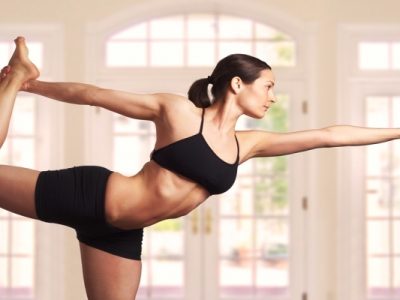
Practice dedicated single-leg balancing postures, such as tree pose or eagle pose, to stimulate the mechanoreceptors in the soles of the feet and strengthen the intrinsic stabilizers of the ankle complex.
-
Utilize gentle, rotational spinal twists to maintain mobility in the thoracic spine, which prevents the lower back from over-rotating and suffering structural strain during daily lifting and turning movements.
-
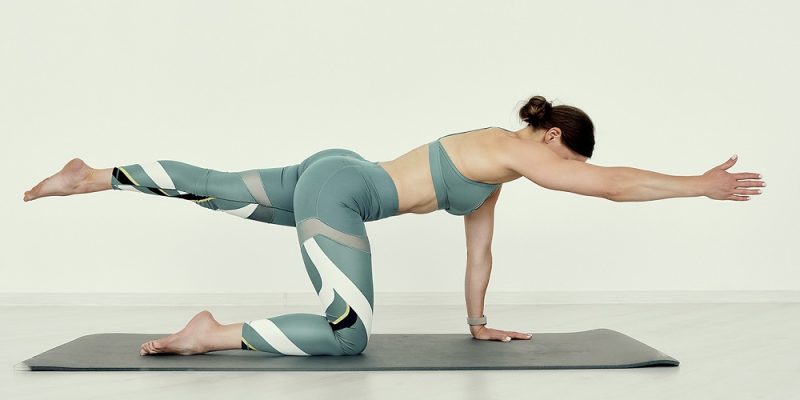
Engage in quadruped movements, such as the cat-cow sequence, to re-establish coordination between the pelvic tilt, spinal extension, and the core musculature.
By prioritizing precision, alignment, and consistent practice over superficial flexibility, anyone can utilize yoga to retrain their nervous system, reinforce their deep structural stabilizer network, and move through life with enhanced balance, grace, and structural resilience.
Frequently Asked Questions
What exact role do the intrinsic muscles on the sole of the foot play during single-leg yoga balances?
The intrinsic muscles of the foot, often referred to as the foot core, are responsible for maintaining the structural integrity of the medial longitudinal arch. When standing on one leg during a yoga pose, these tiny muscles contract dynamically to prevent the arch from collapsing inward, a movement known as overpronation. By actively gripping the mat and stabilizing the arch, these muscles provide a solid, unyielding mechanical foundation that prevents the ankle from rolling, which keeps the knee and hip joints properly aligned above.
Why do some individuals experience noticeable muscular shaking when holding a slow yoga pose for the first time?
This muscular shaking is a completely normal physiological response known as a benign tremor or motor unit fatigue. When the body is forced to hold an unfamiliar isometric position, the nervous system struggles to smoothly coordinate the firing rates of individual motor units within the target muscle. As some motor units tire out, the brain rapidly recruits new ones to maintain the posture. This alternating cycle of muscle fiber contraction and relaxation manifests visually as a tremor until the neuromuscular pathways adapt to the specific movement pattern.
How does improving thoracic spine mobility through yoga directly protect the lower back from injury during daily tasks?
The human spine is designed with alternating zones of stability and mobility. The lumbar spine, or lower back, is structurally built for stability and can safely tolerate very little rotation. The thoracic spine, or mid-back, is highly adapted for rotational movement. When an individual has a stiff, immobile thoracic spine due to poor posture, daily twisting actions force the lumbar spine to rotate beyond its safe anatomical capacity. Yoga restores mobility to the thoracic segments, ensuring that rotational forces are absorbed by the mid-back, thereby shielding the lower back from structural disc strain.
Can practicing yoga help individuals suffering from chronic vertigo or inner ear issues restore their balance?
While yoga cannot cure organic structural pathology within the inner ear’s vestibular apparatus, it can significantly improve overall stability through a process known as sensory substitution. When the vestibular system sends faulty or degraded balance signals to the brain, the body must rely much more heavily on its visual and proprioceptive inputs to remain upright. Yoga’s intense focus on joint alignment, foot placement, and visual focal points trains the brain to heavily prioritize and utilize these alternative sensory streams, effectively compensating for the inner ear deficit.
Does stretching a muscle during yoga permanently alter the physical length of the underlying muscle proteins?
No, standard yoga stretching does not physically elongate the actual actin and myosin protein filaments within a muscle cell. Instead, the immediate increase in flexibility is primarily driven by an increased stretch tolerance within the central nervous system. The brain possesses a protective mechanism that stops a muscle from extending too far to prevent tearing. Regular, mindful yoga practice retrains the nervous system to feel safe at longer muscle lengths, which relaxes this protective neural brake and allows the muscle fibers to slide open to their full structural potential.
Why is maintaining an unmoving visual focal point so critical when executing a difficult balancing posture?
Utilizing a static visual anchor, known traditionally as a drishti, provides the brain with a constant, reliable environmental baseline. When the body begins to waver or sway on an unstable surface, the visual system tracks this movement relative to the stationary focal point. The brain instantly calculates the exact direction and speed of the body’s sway and sends rapid, corrective electrical commands to the skeletal muscles of the lower body to counteract the displacement, preventing a complete loss of balance.